Archive note
Equilateral Triangle Perimeter (P = 3a)
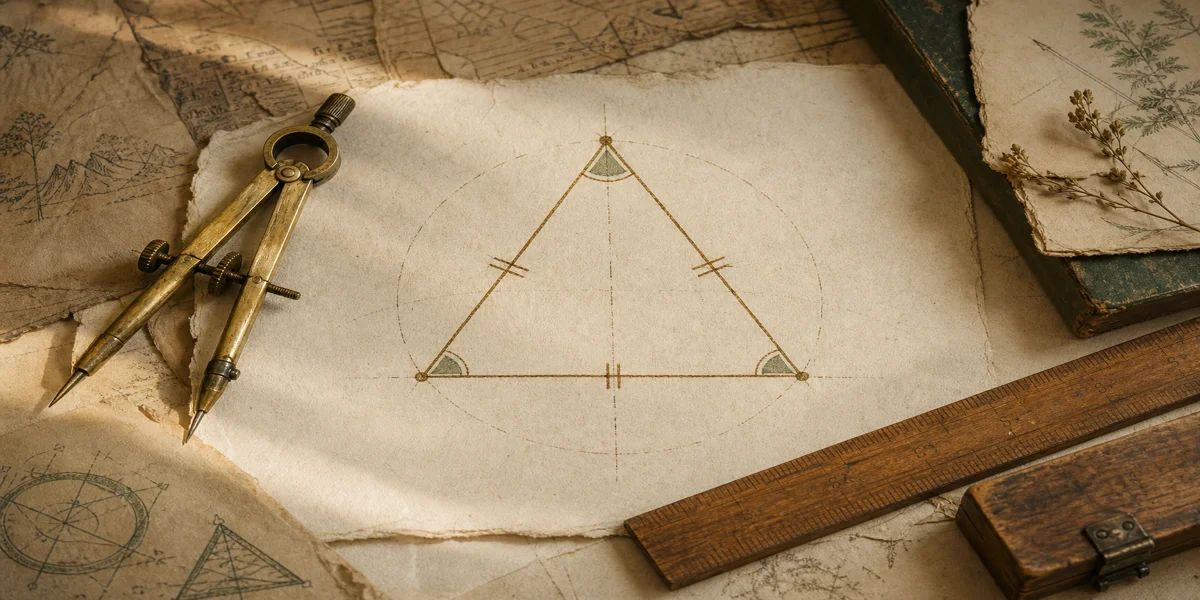
When all three sides match, perimeter is three times one side length.

Archive note
When all three sides match, perimeter is three times one side length.
P = 3a where a is the length of any side.
Formula
Use the home calculator with the same value in all three side fields, or multiply one side by 3 mentally.
Equilateral triangles appear in symmetry lessons, tiling patterns, truss sketches, and logo design because equal sides simplify every calculation.
The rule P = 3a is a special case of the general sum described in the perimeter of a triangle formula article.
Three congruent sides mean you measure once and multiply by three. That is the entire perimeter calculation when the type is confirmed.
Formula simplification saves time on timed tests when the diagram marks all sides equal with matching tick marks.
Geometry applications include equilateral tile layouts, warning signs with equal edges, and engineering diagrams where three struts match.
Educational exercises often give one side and ask for perimeter directly, which trains you to spot symmetry before you write unnecessary terms.
Example: a = 6 gives P = 18 in the same unit.
You can still write P = a + a + a to show the addition idea, then simplify to 3a for speed.
If a problem gives perimeter and asks for one side, divide by three: a = P ÷ 3.
Compare this case with two equal sides in the isosceles triangle perimeter calculator guide when diagrams show only a pair of matching edges.
A short path works every time when you confirm the type first.
Side 10 → P = 30.
Side 2.5 m → P = 7.5 m.
A tabletop equilateral triangle with side 18 in needs P = 54 in of decorative trim.
Practice problems often pair perimeter with area later; stay focused on boundary length until the question clearly asks for interior measure.
Equilateral perimeter is the fastest special case: one measurement, one multiplication.
Verify on the calculator and mix in mixed examples so you do not rely on 3a when a diagram is actually scalene.
Solve triangle perimeter word problems: cue words, sketching tips, fencing and border examples, and how to check answers with a free online calculator.
Perimeter vs area of a triangle: formulas, units, cue words, real uses, and common mistakes so you pick the right measurement every time.
Scalene triangle perimeter with unequal sides: P = a + b + c, triangle inequality checks, geometry examples, and practice for tests and projects.